

AI decisioning in CRM

Make sure AI is learning the right things.

The data you give AI shapes every decision it makes. Here’s what needs to be in place and why addressing it helps your programme right now.

Download the AI Readiness Checklist

Getting AI decisioning right is a data problem, not a technology problem.


The debate often centres on platforms, tools and autonomy.  Discussing which AI will make decisions, how much control to hand over, and which model is most sophisticated. These are real questions… eventually. But they’re not where the risk is.

The risk is in the data. AI doesn’t know whether the signal you give it is good. It will work with whatever it has and do so with complete confidence. Which means the questions that actually matter isn’t “are we ready for AI?,” it’s “is our data good enough for the decisions it would make?”

For most organisations, the answer is: not quite. But closer than you think.

Four foundations that address today’s problems and get you ready for AI.

These are the data foundations that determine whether your CRM programme makes good decisions today and whether AI decisioning is possible tomorrow. You don’t need to perfect all of them at once. But ignoring any of them creates blind spots that compound.

Customer identity resolution

Who is this customer across every touchpoint and channel they use?


Reduces wasted spend on already-converted, lapsed or misidentified customers today. And without a solid identity layer, any AI model is working with fragments and will be very confident doing so.

Data latency & freshness

How current is the data that’s driving your decisions right now?


Campaigns respond to what customers are doing now, not last month. A model trained on old data will optimise for a customer who no longer exists.

Event & exposure history

Are you tracking what customers saw, not just what they did?


Prevents your measurement from crediting activity that was going to happen anyway. Without this context, every model is learning from an incomplete picture.

Causal measurement

Do you know what actions changed vs what would’ve happened anyway?


Makes the trading meeting more credible and budget conversations stronger. And without incrementality, AI optimises for patterns rather than impact which is the difference between a tool that reports and one that learns.

Start wherever you are.

Whether you want a quick read, a self-diagnostic, or something to go deeper with, there’s a starting point here for every stage of the conversation.

The Decisions Behind the Decisions

Start here if you want a practical starting point for how to integrate AI within your CRM programme. One that doesn’t begin with platforms or technology.
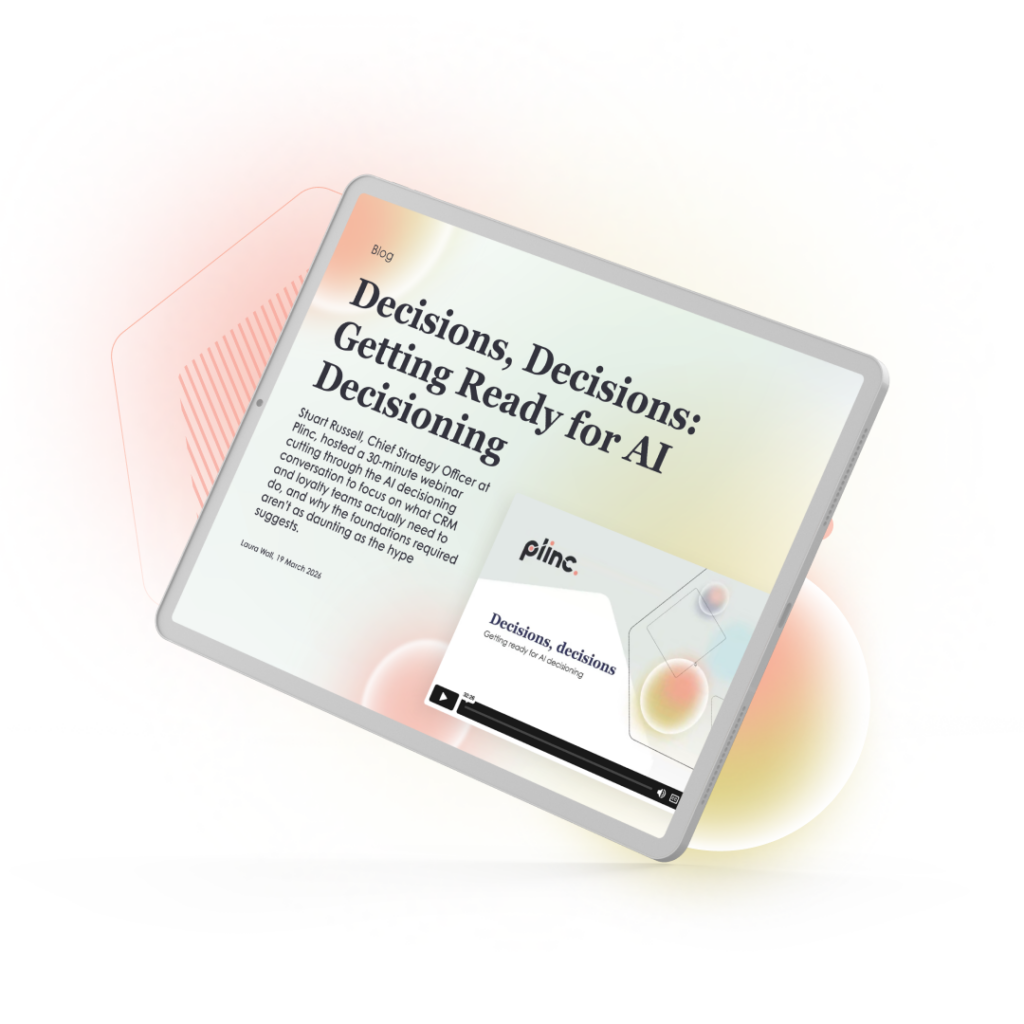
Read the post →

AI Decisioning in CRM — Full Webinar Recording

The full recorded session covering the four foundations, the causal measurement argument, and a client case study that walks through how learning-led decisioning delivered 40%+ uplift in incremental revenue.
Watch the recording →

Data Foundations in CRM

A practical guide on the four foundations that determine how your data can better support decisions today and AI decisioning tomorrow. What good looks like, what gets in the way, and what to prioritise first.

Download the guide →

AI Readiness Checklist

A self-diagnostic built around the four foundations. What good enough looks like, the common warning signs, a sanity-check question for each, and one pragmatic improvement you can make now.
Download the checklist →

Creating the Learning Layer

A deep dive into causal measurement for teams ready to build the learning layer into their programme. Includes how target and control works in practice and a client case study.

Download the eBook →

Machine Learning Playbook for CRM

For CRM teams who are already working with predictive models. Review how deeply your current ML programmes are embedded, how consistently they’re measured, and what role they play in shaping your wider AI strategy.

Download the playbook →

40%+
uplift in incremental revenue

A large multichannel retailer used a causal learning layer to reprioritise their campaigns based on true incremental value, identifying which customers genuinely drove additional revenue and suppressing activity that was being credited for outcomes that would have happened anyway.

The result wasn’t from sending more. It was from making better decisions about who to contact and when. That’s what the right measurement infrastructure makes possible.

Want to talk about how this applies inside your organisation?

If you’re thinking about where your programme stands across these foundations, we’re happy to spend 30 minutes talking it through. No agenda, just a conversation with practitioners who think about this every day.